
From Kolkata Streets to CR Park: The Evolution of Bengali Street Food


When Bengalis migrated for work, education, or family, they took with them stories, books, music — and food. Delhi became one of the biggest cultural hubs for Bengali communities, especially after the establishment of Chittaranjan Park (CR Park) in the 1960s.
At first, Bengali families cooked traditional dishes at home. But soon, cravings for local favourites like puchka, chaat, fish fry, mutton ghugni, and telebhaja led to food stalls emerging near temples, markets, and cultural hubs.
This is where Bengali street food began evolving outside Bengal.
CR Park: Delhi’s Street Food Paradise With a Kolkata Heart
Today, CR Park is famously known as the Mini Kolkata of Delhi — and its food scene is a major reason behind that title.
As you walk through Market 1, Market 2, or the evening pandal lanes during Durga Puja, you’ll find:
Authentic Bengali puchka
Egg roll and kathi roll stalls
Fish fry, prawn cutlets, and mutton chops
Ghugni served with coconut and lime
Jilipi and roshogolla at sweet shops
Chingri malai curry and ilish bhapa counter stalls
The flavours match home — sometimes even better — because they’ve adapted and evolved to local ingredients, yet kept traditional techniques alive.
What Makes CR Park Bengali Street Food Unique?
The evolution wasn’t just geographical — it was emotional, culinary, and cultural.
Three things make CR Park’s street food special:
1. Tradition Meets Innovation
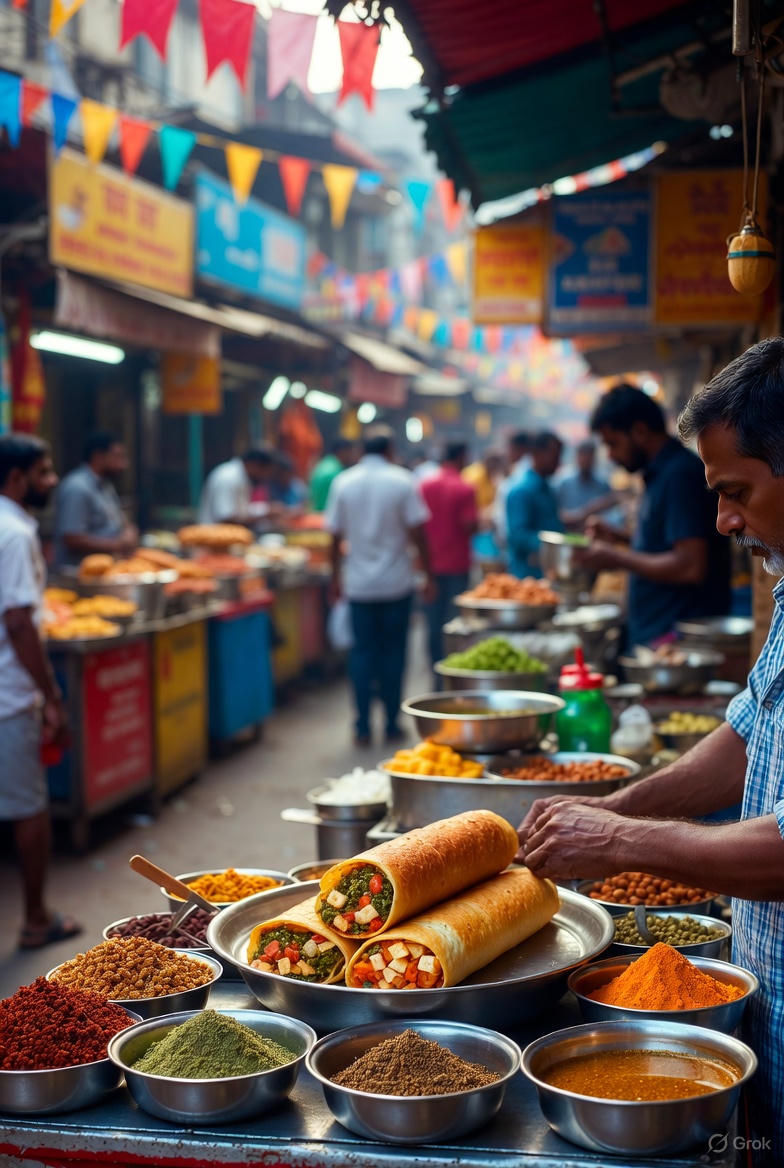
Vendors use traditional Bengali spices — bhaja moshla, panch phoron, kashundi, mustard oil — but also experiment with Delhi influences.
Example: The classic Kolkata egg roll now sometimes comes with spicy green chutney or paneer filling — additions you rarely find in Kolkata.
2. Community and Identity
Food in CR Park isn’t business — it’s belonging. It represents memories of:
Durga Puja pandals
Sunday family outings
College adda
Hand-pulled rickshaw rides
Rainy evenings with hot telebhaja
Every food stall feels like a cultural bridge to Bengal.
3. Authenticity Maintained Through Ingredients
Whether it’s fresh fish from Bengal, gobindobhog rice, or mustard oil, shopkeepers ensure authenticity. Many ingredients still arrive directly from Kolkata or Bangladesh suppliers.
So the food isn’t just inspired by Bengal — it is Bengal.
Signature Street Foods That Made the Journey
Street Food | Origin: Kolkata | Now: CR Park |
Puchka | Tamarind water + aloo masala | Same taste, sometimes with Delhi twist |
Egg Roll | Iconic Park Street food | One of the most loved CR Park snacks |
Telebhaja | Monsoon favorite | Evening staple in markets |
Ghugni | Made with matar, coconut & spice | Served as street snack + festive dish |
Fish Fry & Chops | British-era influence | Weekend favourite |
Mishti Doi & Rosogolla | Bengali pride | Always in demand |
The Role of Festivals in Street Food Culture
Durga Puja is the biggest cultural celebration for Bengalis, and food becomes part of devotion.
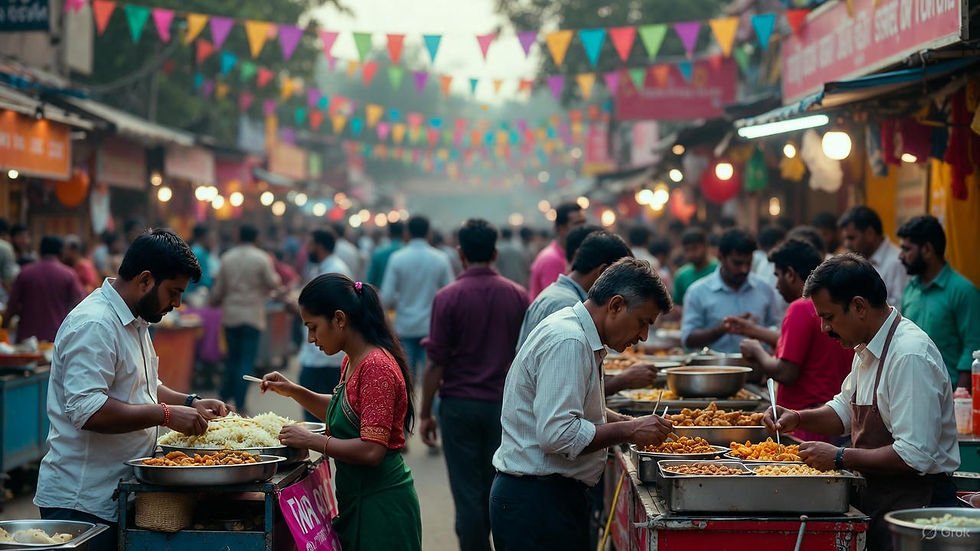
During Pujo in CR Park, vendors recreate the iconic Kolkata Pujo vibe with:
Biriyani stalls
Mughlai paratha counters
Fish fry kiosks
Mishti shops
Street-style momo, roll, and chaat corners
Every year, thousands travel just to experience authentic Bengali cuisine in Delhi, strengthening CR Park’s cultural identity.
A Flavor That Connects Two Cities
From Kolkata’s lively street corners to CR Park’s vibrant markets, Bengali street food has evolved beautifully — yet stayed true to its roots. It represents:
Culture
Memory
Migration
Identity
Celebration
Home
And most importantly — emotion.
Whether you’re eating puchka in Kolkata’s Vivekananda Park or enjoying fish cutlets in Delhi’s CR Park, the feeling is the same:A taste that connects past, present, and people.
Final Thought
The journey of Bengali street food from Kolkata to CR Park is proof of how food travels with people — carrying stories, traditions, and love. And even when the city changes, the flavour remains familiar — like home.


Comments